From Night Classes to Forest Trails: Julie and Roselyn’s Shared Journey
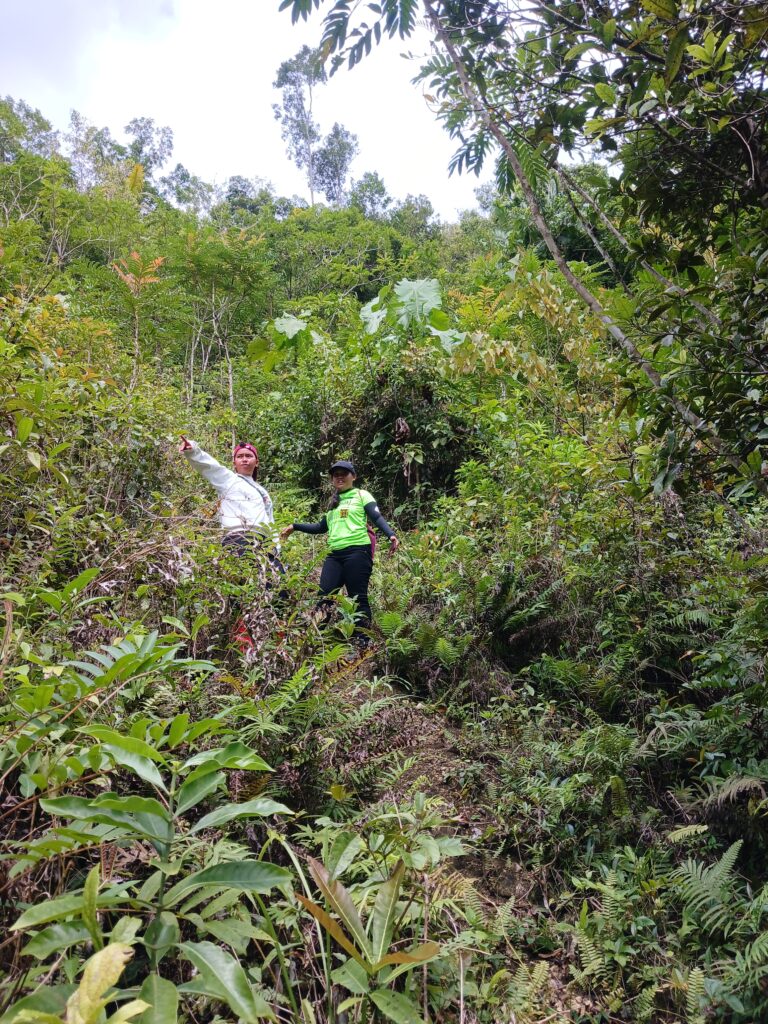
On the steep uplands of Alegria in southern Cebu, two young women move slowly along narrow footpaths, stopping every few meters to measure tree height, check tags, and note which seedlings survived the last quarter. The work is patient and technical: verifying survival rates of seedlings planted under NSFI’s WATER Reforestation Project, part of the Environment Program in Cebu Province.
Typical of foresters, Julie Ann Estrada and Roselyn Rodriguez can easily identify trees and diagnose problems of seedlings with confidence. What is less visible, at first glance, is that before they were hired to walk these ridges, they were NSFI college scholars struggling simply to stay in school. Their journey traces a quiet but powerful line between a scholarship that kept them in class and fieldwork that now helps care for a watershed.
Julie grew up in Simala, Sibonga, in a household of seven. Her father, a farmer and laborer, earned 150 pesos a day when there was work helping neighbors clear land or dig for planting. Her mother stayed at home, tending to livestock, a small vegetable garden, root crops and copra. There was never much money, and older siblings tried to finish school as working students. Some did not make it to graduation.
By Grade 10, Julie had decided she would not be the next to stop schooling. Every Saturday and Sunday she worked at a small store near their house and school, about a kilometer away. “Duol na na para namo,” (A kilometer is just close) she says. There were days when she had no pocket money for school, so she would simply report to work instead. Most weeks, she missed one day of class to take an extra shift, working about three days a week at 150 pesos per day. It was just enough to keep going, but it was exhausting. When the pandemic hit and classes moved online, she could not enroll immediately because she had no cellphone. She had to save first, then she applied to Cebu Technological University (CTU) – Argao when enrollment opened again.
Roselyn’s road in Taloot, Argao, looked different but felt just as hard. She is the eldest daughter in a household of nine, with a carpenter father whose income rises and falls with available contracts, and a mother who is part of the fisherfolk community. After finishing Grade 12, she was told to stop schooling so that her younger sibling could study first. To help at home, she worked part-time in an agrivet store and her “Bossing’s” small sari-sari store, earning 150 pesos a day when there was work.
When an opportunity finally came for her to enroll in college, she and Julie ended up studying together. Their routine was intense: duty from 7 a.m. to 4 p.m., then preparing for night classes. For a long stretch from first year to the second semester of second year, their days were full-time work followed by evening lectures. As self-supporting students, they constantly had to choose: continue studying or stop and earn more to help their families.
The turning point came when the school merged night classes into daytime because there were not enough staff and teachers. If classes were moved to the morning, there would be no time left to work. Walking to the bus terminal one day, Julie and Roselyn discussed whether they should simply pull out their credentials and stop. At their usual hang-out near a playground where they often paused before going home, they were already imagining life without school.
Then, SMS from Nature’s Spring Foundation, Inc. started coming in. Roselyn remembers a text message from one of her teachers telling her she was qualified for the scholarship and to wait for the final interview. Julie recalls the email that said, “Congratulations, you are qualified.” For both of them, it felt like a door they thought was closing had suddenly opened again. Roselyn cried when she got the news. Julie describes it as the moment she realized that this opportunity was something she had to see through “until board exam.”
Through NSFI’s Education Program, the two received monthly allowances that covered not only school costs but also part of their daily needs. For Roselyn, it meant worrying less about money and being able to focus more on her studies. For Julie, NSFI became the “backbone” for schooling. It was the anchor that allowed her to stay in school while handling her own budgeting. Their families felt the change too. Julie’s relatives no longer worried constantly about how to stretch the budget. Roselyn began to shift from being the one asking for help to being the one who could give, especially to her younger siblings.
The scholarship also came with exposure to NSFI activities that would later connect directly to their work in Alegria: International Coastal Cleanup in Moalboal, tree-planting activities and validation of National Greening Program sites.
In November 2024, Roselyn volunteered to do seed validation in four barangays in Alegria, gaining field experience she could apply in class. Julie, too, volunteered at NSFI for short-term work aligned with forestry, giving her both income and practical skills.
The journey was not smooth. Both of them hit academic bumps: grades that made them cry, the stress of meeting scholarship requirements, letters of explanation and promissory notes when they fell short. Julie failed multiple times and had to write promissory notes to NSFI, all while navigating a fragile relationship with her mother after leaving home to study and work. Roselyn, for her part, carried the emotional and financial weight of being the eldest daughter in a large, low-income family. Yet both describe themselves as people who keep showing up even when tired, who know how to smile in public even when the what-ifs and speculations crowd in when they are alone.
In 2025, they reached the milestone they had been working toward: finishing their forestry degree and sitting for the Forester Licensure Examination. Julie passed the board exam. Roselyn did not—at least not yet. It was a painful result, but one that did not erase the years of discipline, night classes and work they had already invested, nor the trust NSFI had placed in them.
By then, NSFI’s relationship with them had already begun to shift from pure scholarship support to professional engagement. After graduation, NSFI offered them contracts. Julie puts it as a “big offer; a fresh start and new experience.” For Roselyn, it felt like reaching “Level 3” of engagement with NSFI: from simply listening and observing, to helping assess planted seedlings, and now to being among those who validate seedling survival.
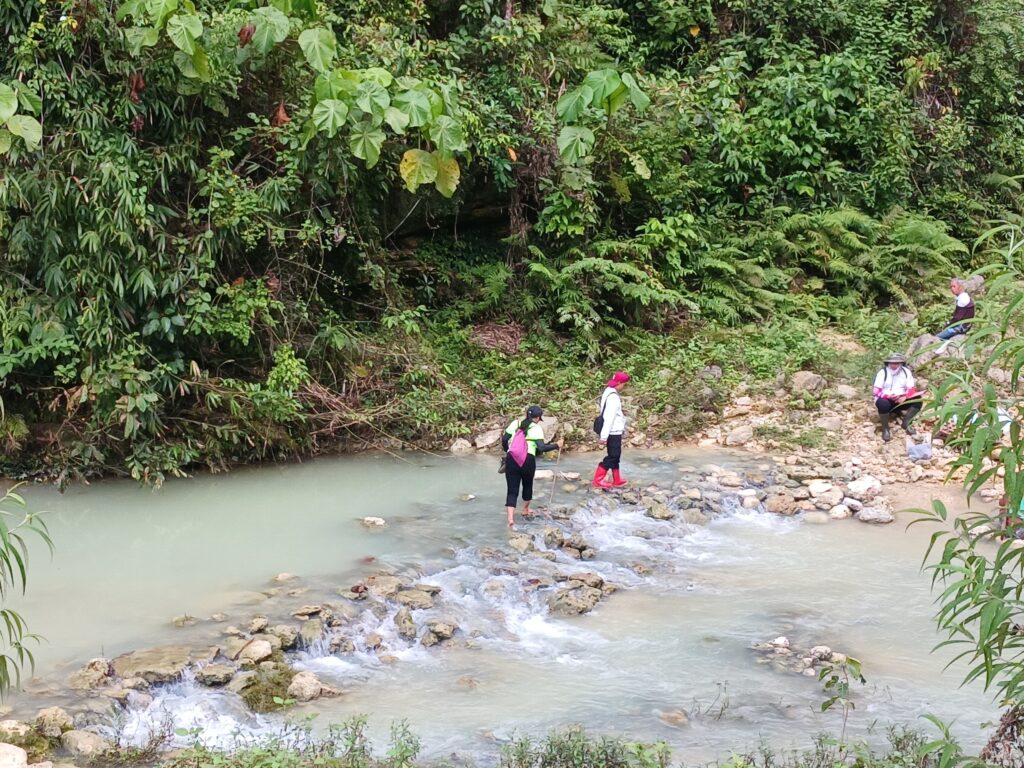
Today, Julie and Roselyn are part of the Environment Program’s team in Alegria, helping monitor and validate the survival of trees planted under the WATER Reforestation Project in upland barangays. They walk with people’s organizations and community leaders, help organize data from the field, and see up close how a long-term commitment depends on careful documentation as much as on planting itself.
Their presence in the field is not just technical. Roselyn often thinks about her family when she says the change in her life is “continuous” and that going back would be more exhausting than pushing forward, because there are still people who need her help. Julie talks about how being surrounded by professionals has changed the way she carries herself. She notes that when you are with professionals, you learn to act like one, setting aside old habits and stepping into a more disciplined way of working.
Julie and Roselyn’s experience shows how support that begins in the classroom can eventually take root in a watershed. It started with two young women, often broke and exhausted, trying to study at night after a full day’s work. It ran through a single email that kept them from dropping out and a scholarship that became the backbone of their education. Today, their journey continues in the forests of Alegria, where they walk as former scholars turned watershed stewards, bringing together their lived experience and their growing professional identity in forestry. ###