
Alegria Partner POs Step Up as Forest Guardians Through IEC and Bookkeeping Sessions
Communities in Alegria, Cebu receive support to strengthen their Community-Based Forest Management (CBFM) practices through a series of information, Education, and Communication (IEC) sessions conducted this October.
Nature’s Spring Foundation Inc. (NSFI), in partnership with the four partner People’s Organizations in Alegria, the Department of Environment and Natural Resources (DENR) and the Local Government Unit (LGU) of Alegria, held Information, Education, and Communication (IEC) sessions in the barangays of Valencia, Compostela, Guadalupe, and Lepanto on October 16 and 29, 2025. The sessions aimed to help communities better understand their roles and responsibilities in Community-Based Forest Management (CBFM) and are part of NSFI’s broader initiative to address low community awareness on CBFM—a pressing issue identified by its partner People’s Organizations in during a project review and risk management planning conducted in May and July of 2025.
Building Understanding
The IEC sessions revealed opportunities for strengthening community knowledge about CBFM. A pre-activity assessment was conducted to gauge the understanding of the participants on CBFMA, the results generally show a significantly low to medium levels of awareness among the participants.
Nancy Miranda, the resource speaker from DENR-CENRO Argao, emphasized the importance of the orientation sessions. “We need to understand what the CBFMA is. What is the legal basis?” she said, noting that regular orientations help communities stay informed about their forest management responsibilities.
Understanding Rights and Responsibilities
The CBFMA was awarded over 20 years ago to allow communities to rehabilitate and manage forest lands. These agreements give People’s Organizations the right to protect and develop the area, including potential benefits from sustainable harvesting and other forest-based livelihoods.
Miranda explained that communities work within a Community Resource Management Framework (CRMF)—a guidebook that outlines activities allowed in the forest areas and serves as a plan for sustainable management over 25 years. Revenue is shared with the People’s Organizations, providing potential income for these organizations to sustain its management.
The canyoneering operations in Compostela, for instance, were later incorporated into the CRMF, demonstrating how communities can develop livelihood opportunities while maintaining proper forest management.
A Comprehensive Approach
The IEC sessions in Barangay Valencia, Compostela, Guadalupe and Lepanto are part of NSFI’s “Strengthening Roots: Communities and Youth for Forest and Watershed Protection” initiative, which includes activities scheduled in the month of October in 2025.
The initiative targets at least 200 community members across four barangays—Compostela, Valencia, Guadalupe, and Lepanto—with a minimum of 50 participants per barangay. The sessions aim to deepen understanding of the vital role community members play in protecting and conserving Alegria’s watershed.
Basco Tomas Fernandez, the consultant of the Municipal Environment and Natural Resources Officer in LGU Alegria, shared various opportunities that can potentially open to the People’s Organizations when their CBFM is sustained, including windmill projects, sustainable tree harvesting, bamboo management, and cinnamon production. The sessions also addressed organizational development needs. Discussions also arose about strengthening the PO’s internal structure as a crucial organizational step to laying down the foundational layer to a sustained community-based forest management.
Engaging the Youth
Beyond community sessions, NSFI and its partners are also conducting IEC activities for youth to inspire a call to action in forest protection and conservation. The youth sessions, held on October 18 and 25, focus on climate change awareness, environmental protection, and planning for sustained action.
These activities will guide NSFI’s community partners in engaging youth as advocates for forest protection, thereby strengthening the sustainability of community-based forest management approaches. At least 150 youth members from Alegria are participating in interactive discussions that connect their priorities and initiatives with their role in CBFM.
Growing Awareness
By the end of the sessions, participants showed improved understanding of their roles in forest management. The post-activity assessment showed an increase of participants who rated their knowledge as “good” and “excellent”—a significant improvement from the initial results.
When asked what they learned, participants shared insights about their rights to protect the area, the importance of proper forest care, and how the CBFMA enables them to manage and benefit from the forest sustainably. “For me as a member, we need to protect the area for its development of the CBFMA, and also that our CBFMA will continue,” one participant from Barangay Compostela wrote in the evaluation.
In Valencia, participants emphasized their commitment to participating in future activities. When Miranda asked who would participate in upcoming programs, everyone raised their hands with enthusiasm.
The resource speaker reminded participants of their role in sharing knowledge, and the importance of building a communication system for IEC to reach up to the purok level in the near future. “Those who are here are leaders in your respective communities; it is your responsibility now to share what you have learned here with those who did not attend,” she said.
Partnership for the Future
NSFI’s partnership with the communities extends beyond the reforestation project. The foundation supports community-based forest management activities, while contributing to the POs implementation of their CRMF plans and strengthening their organizational capacity. All of these are included in the foundation of the community resource management framework which is the backbone of the CBFMA.
Aside from the IEC Sessions, NSFI’s Finance Team strengthened partner POs through continuous monitoring of their financial reporting and record-keeping. This was done through mentoring sessions from November 13 to 16. Building on the intervention of the Finance Team, NSFI Environment Program conducted a bookkeeping workshop on November 19. The learning pre-assessment showed that 78.6% of the PO members reported increased bookkeeping awareness, 91.7% understood income versus expenses, and 81.8% actively practiced regular report writing. This data indicates that the Finance Team’s intervention increased the partner POs’ absorptive capacity for the bookkeeping workshop proper of the Environment Program. This new integrated approach laid the conditions for enthusiasm for an organizational development component that was shunned in the past and for more committed organizational practices for improved financial health.
The mentoring encouraged the POs to build sustainable financial management capabilities which go beyond partnership requirements. In their action plans, the POs committed to continuous financial reporting and cash flow monitoring. They also identified training needs including funds utilization report preparation, project impact reporting, and project proposal development. This illustrates their commitment to strengthening their organizational capacity for long-term sustainability.
All of the POs continue to work with NSFI, DENR, and the LGU to strengthen their community-based forest management practices. With regular meetings, capacity-building activities, and collaborative support, the communities are building the knowledge and skills needed to sustain their role as forest stewards for generations to come.###
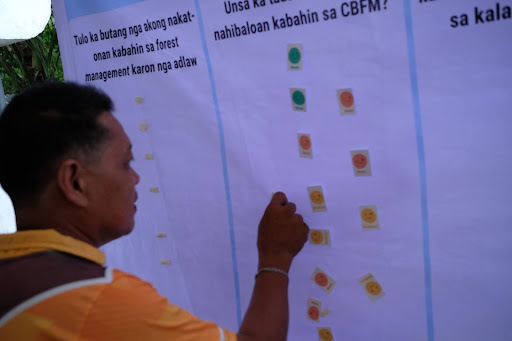
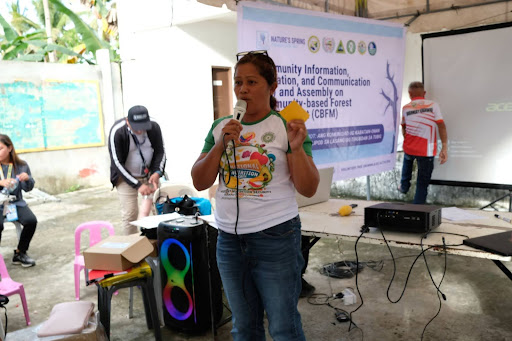
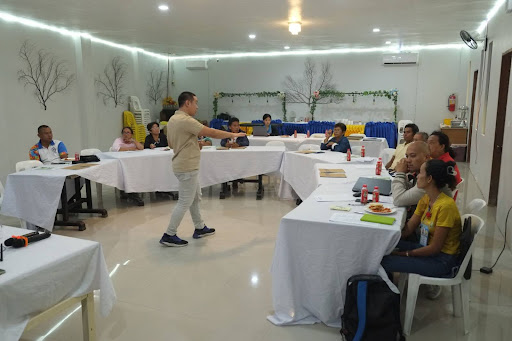
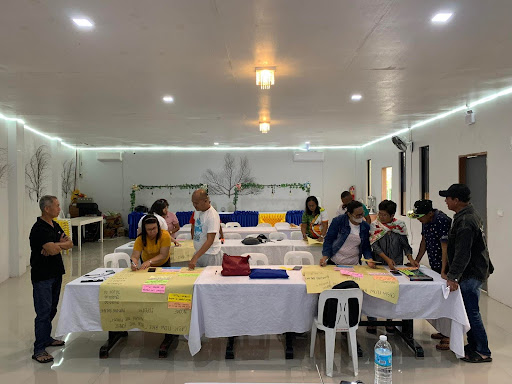
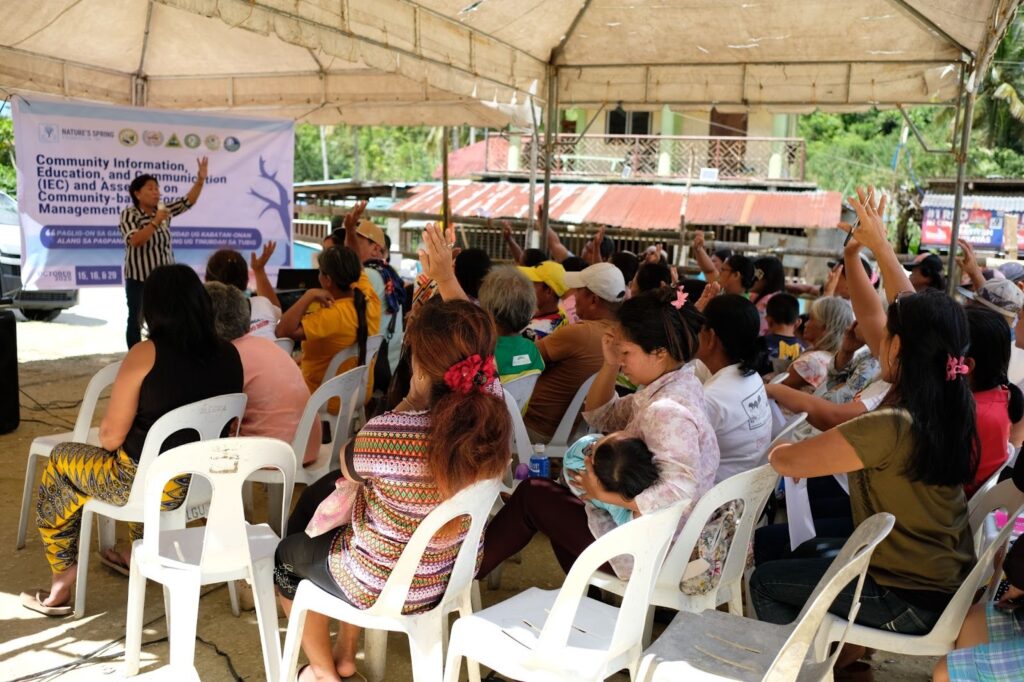
Community-Based Forest Management (CBFM) awareness and knowledge-building sessions with the Valencia Inghoy Farmers Association (VIFA), one of four POs in Alegria who participated in the IEC sessions held in October 2025