𝐖𝐚𝐯𝐞𝐬 𝐨𝐟 𝐖𝐞𝐥𝐥𝐧𝐞𝐬𝐬: 𝐇𝐨𝐰 𝐚 𝐑𝐚𝐝𝐢𝐨 𝐏𝐚𝐫𝐭𝐧𝐞𝐫𝐬𝐡𝐢𝐩 𝐢𝐬 𝐂𝐡𝐚𝐧𝐠𝐢𝐧𝐠 𝐭𝐡𝐞 𝐃𝐢𝐚𝐛𝐞𝐭𝐞𝐬 𝐂𝐨𝐧𝐯𝐞𝐫𝐬𝐚𝐭𝐢𝐨𝐧 𝐢𝐧 𝐌𝐚𝐧𝐝𝐚𝐮𝐞 𝐂𝐢𝐭𝐲
Here’s how the body text will look like on your website. You can customize the typography to match your brand personality. Whether you aim for a modern and sleek appearance or a more tradition. The numbers tell a story of a persistent health challenge. Over a recent three-year period, Mandaue City recorded diabetes mellitus incidence rates of 113 per 100,000 residents aged 20-59, and 239 per 100,000 among those 60 and above. An innovative partnership has emerged in response: Nature’s Spring Foundation, Inc. (NSFI), the Mandaue City Health Office, and Love Radio 97.9 FM have joined forces, proving that sometimes the most powerful medicine comes not in a pill bottle, but through radio waves reaching thousands of listeners every day.
Behind these statistics are real people—mothers, fathers, grandparents, community members—facing a chronic illness shaped by genetics, dietary habits, economic constraints, and the relentless march of food commercialism.
“Diabetes mellitus is a chronic illness influenced by factors such as genetics, poor diet, food commercialism, and limited financial resources,” explains Dr. Debra Catulong, Mandaue City Health Officer. Her words underscore the complexity of the challenge facing her team and the communities they serve.
𝑭𝒊𝒏𝒅𝒊𝒏𝒈 𝒕𝒉𝒆 𝑹𝒊𝒈𝒉𝒕 𝑭𝒓𝒆𝒒𝒖𝒆𝒏𝒄𝒚
When NSFI decided to launch a social and behavior change (SBC) campaign addressing diabetes mellitus, they didn’t simply create posters or distribute pamphlets. They asked a more fundamental question: How do Mandaue City residents actually receive information?
The answer was clear. Studies showed that radio remains the medium with the widest reach in the community. In an era of smartphones and social media, the humble radio—playing in sari-sari stores, tricycles, homes, and workplaces across the city—still commands the most consistent audience.
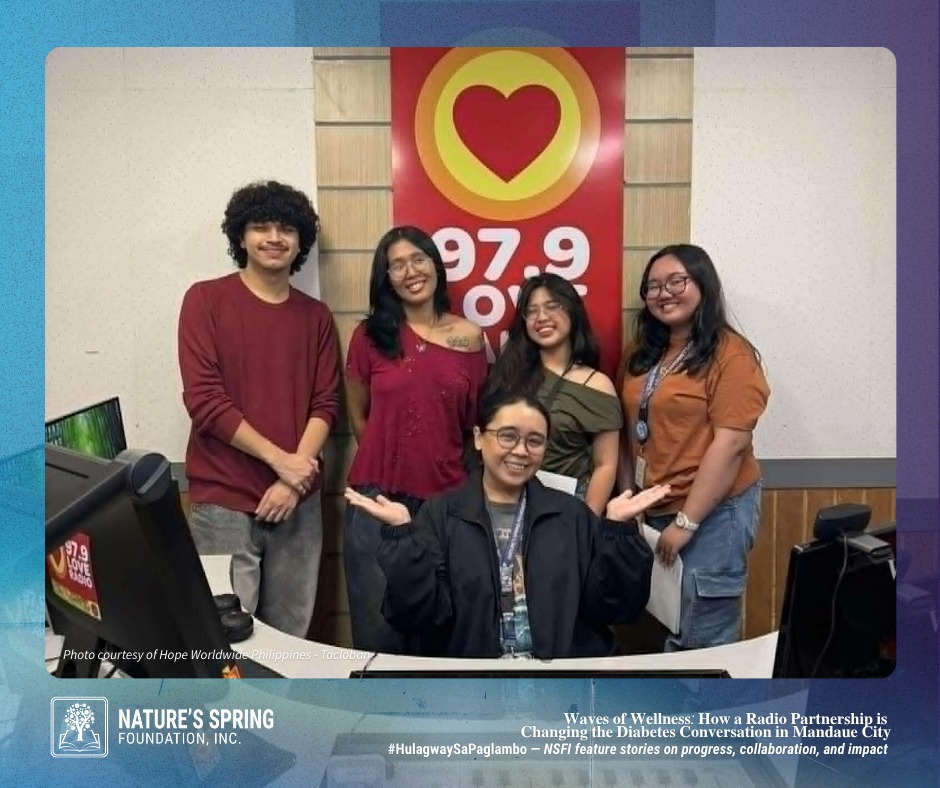
But creating effective radio content requires more than good intentions. It demands expertise in both health messaging and communications. This is where an innovative collaboration took shape. NSFI worked with communications interns from the University of San Carlos and health experts from the Mandaue City Health Office to co-create and co-produce radio plugs that would be both medically accurate and genuinely engaging.
The young communications interns brought fresh perspectives and technical skills in scriptwriting and audio production. The health professionals contributed clinical expertise and understanding of community health needs. Together, they crafted messages that could cut through the noise of daily life and deliver potentially life-saving information.
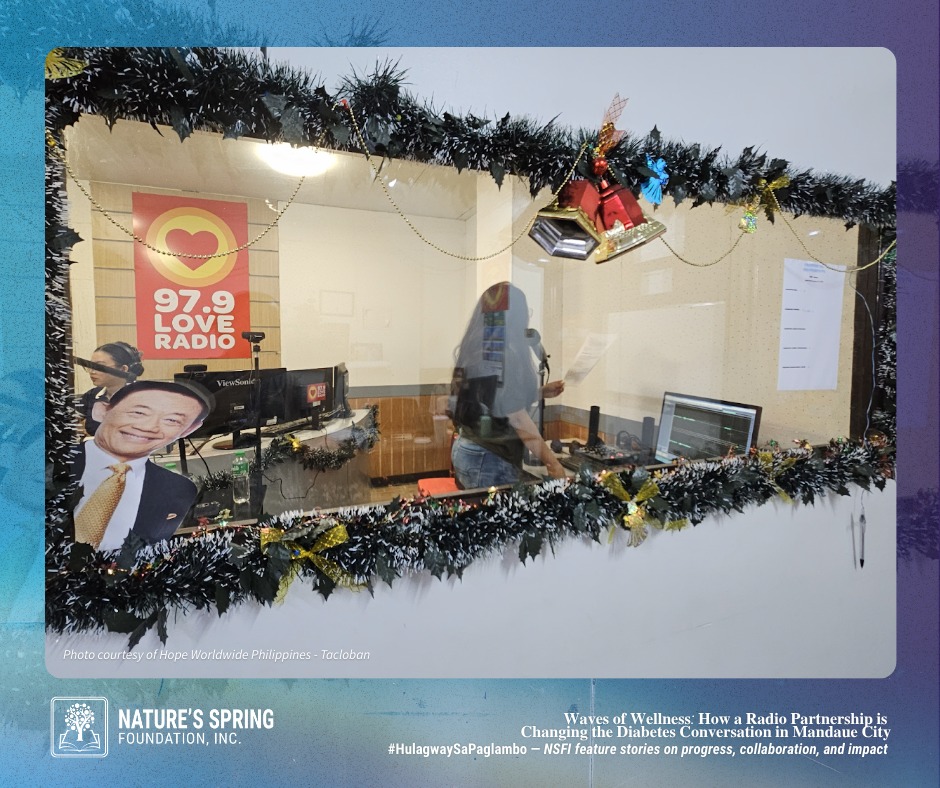
Love Radio 97.9 FM entered the partnership not just as a broadcast platform, but as a collaborative partner. The station provided professional recording facilities and technical expertise, giving the radio plugs their final polish. More significantly, Love Radio committed to an aggressive dissemination schedule: five distinct radio plugs on diabetes mellitus, cycled six times daily for six months, beginning in October 2025.
That’s 30 opportunities every single day for Mandaue City residents to hear about diabetes prevention, symptoms, and management. Over six months, thousands of impressions—reaching commuters during rush hour, homemakers preparing meals, workers on lunch breaks, and families gathered in their living rooms.
𝑩𝒆𝒚𝒐𝒏𝒅 𝑻𝒓𝒂𝒅𝒊𝒕𝒊𝒐𝒏𝒂𝒍 𝑯𝒆𝒂𝒍𝒕𝒉𝒄𝒂𝒓𝒆 𝑫𝒆𝒍𝒊𝒗𝒆𝒓𝒚
Dr. Catulong’s office has long recognized that addressing diabetes requires a multi-pronged approach. The Mandaue City Health Office implements community-level interventions including public awareness campaigns, nutrition education, free laboratory examinations, and distribution of anti-diabetes medications. At the individual level, they provide consultations, diagnostic services, and treatment monitoring.
The office has even pioneered a healthy workplace initiative within their own organization, promoting balanced diets, discouraging sugary drinks, encouraging physical activity, and providing annual health screenings. The goal is to test these strategies with their own workforce before replicating them city-wide.
Yet Dr. Catulong acknowledges the limitations her team faces. Barangay health workers juggle multiple Department of Health programs simultaneously, leaving limited time to focus on any single chronic illness. “The SBC campaign dedicated to diabetes mellitus provides much-needed support to CHO interventions,” she notes.
The partnership approach recognizes a crucial principle in public health: no single organization can tackle complex health challenges alone. “Multi-stakeholder involvement is widely recognized as essential for maximizing the impact of health initiatives,” Dr. Catulong emphasizes. “This partnership ensures broader reach, greater community engagement, and increased awareness of diabetes prevention and management.”
𝑨 𝑫𝒊𝒇𝒇𝒆𝒓𝒆𝒏𝒕 𝑲𝒊𝒏𝒅 𝒐𝒇 𝑬𝒙𝒄𝒉𝒂𝒏𝒈𝒆
The partnership’s structure reveals creative thinking about resource sharing. Rather than a traditional cash payment, Love Radio receives 150,000 pesos worth of Nature’s Spring bottled water to support Operation Tulong, the station’s outreach caravan with a health component. This arrangement aligns perfectly with both organizations’ missions: NSFI supports a community health initiative while ensuring widespread dissemination of diabetes information.
It’s a model that demonstrates how private foundations, government health offices, and media organizations can create synergistic relationships where everyone contributes according to their capacity and mission.
𝑷𝒓𝒆𝒑𝒂𝒓𝒊𝒏𝒈 𝒇𝒐𝒓 𝑺𝒖𝒄𝒄𝒆𝒔𝒔
Dr. Catulong anticipates that the campaign will create what many might consider a welcome problem. She expects the radio plugs to increase public awareness significantly, motivating more people to seek early consultations and laboratory examinations. This should drive higher utilization of barangay health center services and increased demand for medications.
“While this may pose challenges for the local health office due to increased service demand,” she acknowledges, “partnerships with other public and private organizations will be crucial. Such collaborations will help augment existing CHO resources and ensure a more effective response to the growing need for diabetes prevention and control services.”
In other words, success means preparing the healthcare system to meet the needs it uncovers—a challenge the partnership approach is designed to address.
𝑳𝒆𝒔𝒔𝒐𝒏𝒔 𝒊𝒏 𝑪𝒐𝒍𝒍𝒂𝒃𝒐𝒓𝒂𝒕𝒊𝒐𝒏
The NSFI-Mandaue CHO-Love Radio partnership offers a template for addressing public health challenges in resource-constrained settings. It demonstrates that effective health communication requires bringing together diverse expertise: the creativity of communications interns from USC working with NSFI, medical knowledge from health officials, professional broadcasting capabilities, and organizational commitment.
It shows that reaching people where they are—literally, through the medium they actually use—matters more than adopting the latest communication trends. And it proves that innovative resource-sharing arrangements can align organizational missions while maximizing community impact.
As radio waves carry information about blood sugar monitoring, dietary choices, and early warning signs across Mandaue City, this partnership is doing more than raising awareness about a single disease. It’s modeling a new way of working together—one that might just change the frequency of collaboration in public health for years to come.
For Mandaue City residents at risk of or living with diabetes, these radio messages might be the first step toward earlier diagnosis, better management, and healthier lives. That’s a signal worth amplifying.###
[𝑑𝑎𝑡𝑎 𝑐𝑜𝑙𝑙𝑒𝑐𝑡𝑒𝑑 𝑏𝑦 𝑅𝑜𝑏𝑦𝑛 𝑅𝑎𝑦𝑚𝑜𝑛𝑑 𝐵. 𝐿𝑎𝑐𝑠𝑜𝑛, 𝑉𝑜𝑙𝑢𝑛𝑡𝑒𝑒𝑟 𝑃𝑟𝑜𝑔𝑟𝑎𝑚 𝑎𝑛𝑑 𝑃𝑎𝑟𝑡𝑛𝑒𝑟𝑠ℎ𝑖𝑝𝑠 𝑀𝑎𝑛𝑎𝑔𝑒𝑚𝑒𝑛𝑡 (𝑉𝑃𝑃𝑀) 𝑀𝑎𝑛𝑎𝑔𝑒𝑟; 𝑡𝑒𝑥𝑡 𝑏𝑦 𝑀𝑎𝑟𝑖𝑎 𝐼𝑚𝑎 𝐶𝑎𝑟𝑚𝑒𝑙𝑎 𝐿. 𝐴𝑟𝑖𝑎𝑡𝑒, 𝑆𝑒𝑛𝑖𝑜𝑟 𝑀𝐸𝐿 𝑆𝑝𝑒𝑐𝑖𝑎𝑙𝑖𝑠𝑡]al and elegant feel, the right typography sets the tone for your content.