From Seedlings to Sustainability: How Kinatarkan Island is Building Climate Resilience with Bamboo
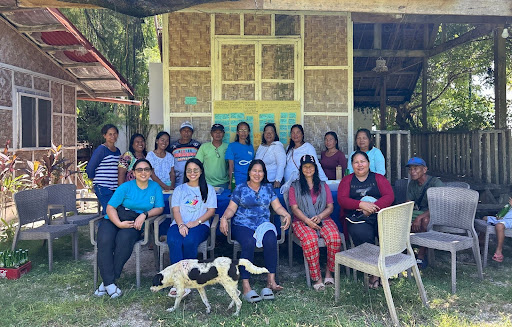
When bamboo seedlings arrived on Kinatarkan Island in early 2024, the members of HAKILAWA (Hagdan, Kinatarkan, Langub Workers Association) saw more than just plants—they saw a path toward self-sufficiency.
The island community of Kinatarcan in Sta. Fe, Cebu had weathered countless storms, quite literally. After Typhoon Yolanda devastated their coastline in 2013, the lack of natural windbreakers left them vulnerable. The need for bamboo was urgent—for building boats, houses, and structures that could withstand strong winds.
“Kani sa isla maam kaning bamboo dako kaayo ni nga tabang tungud diri sa isla gamiton ni nila sa ilang mga pamboat, tarik ug katig,” said Melchor Montolo, a HAKILAWA member. (This bamboo is a huge help on the island because people use it for their boats, outriggers, and other fishing equipment.)
But before the project, sourcing bamboo meant costly trips to neighboring islands. The community needed a local solution. When the Disaster Risk Reduction – Community Adoption for Disaster Preparedness, Prevention and Mitigation (CAD2PM) project launched in partnership with Sto. Niño de Cebu Augustinian Social Development Foundation Inc. (SNAF), 20 HAKILAWA members received Black Bamboo and Giant Bamboo seedlings along with training on bamboo growing and maintenance.
The real learning, however, happened in their backyards.
Protection That Works
The commitment to care for the bamboo stems from understanding its protective role. “Dako ug ikatabang ang kawayan ug naay bagyo, kay pwede ka mu kuan sa ilawm sa kawayan kung adto raka samot na ug kusog ang hangin,” explained Alma Oftana. (Bamboo is a big help when there’s a typhoon because you can take shelter under the bamboo, especially when the wind is strong.)
Members also learned how bamboo helps restore soil fertility—critical for an island with barren, rocky terrain. “Ang kawayanan ug imong hawanan magbutang ka diha ug higda higdaaan, pahuwayan, ug butangan nimo mga tanom sa ilawm pwede sad,” Montolo added. (In a bamboo grove, you can place a resting area, and you can plant crops underneath too.)
Through SNAF’s guidance, the community developed effective practices. They added organic fertilizers—cow manure, dried leaves, and fallen bamboo leaves—to improve soil fertility. When water was scarce, they hauled containers from distant sources during dry spells. One member discovered that planting bamboo alongside banana trees created natural shade for young seedlings. Another mixed fish-washing water with soil for added nutrients. These weren’t techniques from a manual—they were innovations born from necessity.
By the time joint monitoring visits were conducted in August 2025, most bamboo seedlings had survived. Members reported their Black Bamboo grew faster than Giant Bamboo, and many constructed simple fences from discarded materials to protect seedlings from stray animals—small innovations that made big differences.
Beyond Planting: Building a Knowledge Community
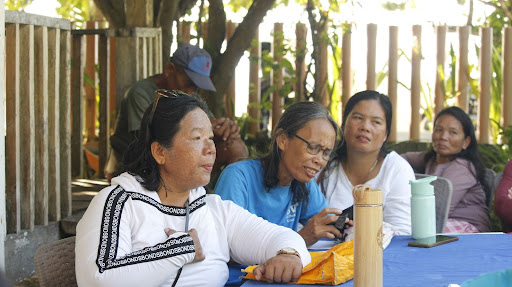
What emerged during the project review was more significant than survival rates. The HAKILAWA members had become each other’s best resource.
“Mag storya storya mi, naay mubisita diri storyaan nako sila sa importansya sa pagpananom sa kawayan,” explained Montolo. (We talk among ourselves, and when visitors come, I share with them the importance of planting bamboo.)
These informal exchanges proved as valuable as formal training. Members shared tips on watering schedules, fertilizer mixtures, and protection strategies. They discussed how bamboo leaves could be used as mulch, how deeper holes helped roots establish better in rocky soil, and which bamboo varieties adapted best to their conditions.
The community also gained a deeper understanding of bamboo’s environmental benefits. During the focus group discussion, members articulated how bamboo helps with carbon sequestration, soil restoration, and serves as a windbreaker during typhoons—concepts that had become personal through their hands-on experience.
Challenges That Remain
Despite progress, gaps persist. Water scarcity remains the biggest constraint, with members requesting additional water drums to support irrigation. Some members wanted more training on bamboo propagation—not just maintenance—so they could multiply their seedlings independently.
“Unsaon pagpadaghan sa bamboo sa isla,” several members echoed during the workshop. (How do we propagate bamboo on the island?)
There is also interest in soil testing to understand why some areas show slower growth, and in benchmark visits to other successful bamboo projects to learn new techniques.
The broader challenge involves sustainability. While HAKILAWA demonstrates strong organizational commitment, continued technical support and resource mobilization remain necessary for long-term success.
A Vision Taking Root
Today, Kinatarkan Island’s bamboo plantations are still young. But the members envision a future where they no longer need to travel to other islands to buy bamboo for their boats and homes.
“Nindot jud siguro kung magpadayon ang pagpananom diri sa kintarkan kay labi na ug madagko na mahalin, kung mahalin ma kwartahan jud naton,” said Oftana. (It would be great if we continue planting here in Kinatarkan because once they grow and can be sold, we’ll earn from them.)
More members are expressing interest in joining the project, drawn by the tangible results they have witnessed. The bamboo represents more than an economic opportunity—it’s about building resilience in a community that understands vulnerability firsthand.
As one member put it: “Kaning kawayan mu long last mani mu lifetime naman ni kay ug mamatay ta ang kawayan magpabilin.” (This bamboo will last a lifetime—even when we’re gone, the bamboo will remain.)
That permanence matters on an island where storms are frequent visitors and where sustainable resources make the difference between resilience and vulnerability. The seedlings planted today are growing into the windbreakers, building materials, and livelihood sources of tomorrow—proof that climate adaptation begins at the community level, one careful planning at a time.
The Bamboo Afforestation Project is implemented by Sto. Niño de Cebu Augustinian Social Development Foundation Inc. (SNAF) in partnership with Nature’s Spring Foundation Inc. (NSFI).###