Listening to Our Partners: What Q4 PIRs Are Teaching NSFI’s Education Program
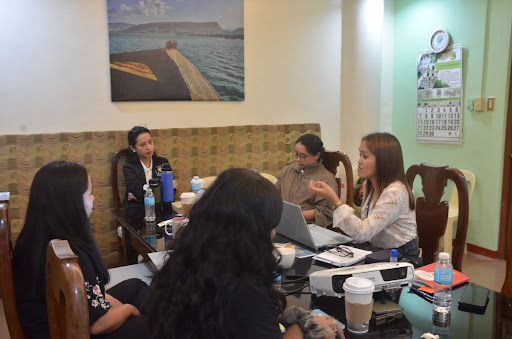
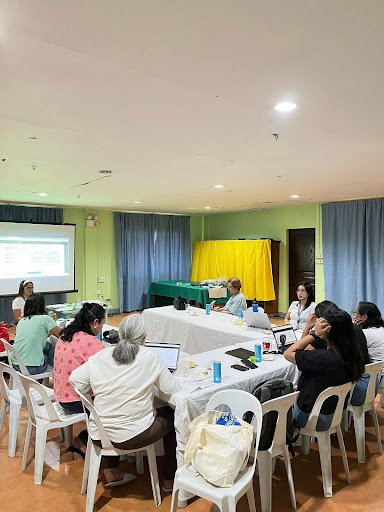
NSFI’s Education Program grew stronger this quarter by doing one simple thing: sitting down with partners and listening. Through Program Implementation Reviews (PIRs) with Holy Name University (HNU) in Bohol, PHINMA Cagayan de Oro College (COC) in Misamis Oriental, HOPE Worldwide Philippines in Ormoc, and Dumaguete Kalauman Center for Development, Inc. (DKCDI), we saw how the scholarship program is working in very different contexts and what needs to change for the next cycle.
These conversations confirmed that tuition support is keeping young people in school. They also showed that partners are carrying a lot of responsibility: orienting scholars, checking grades, negotiating with finance offices, doing home and school visits, designing programs for upskilling and embedding life skills for beneficiaries, explaining policies to families, and coordinating with local government units (LGUs). The PIRs surfaced strong practices and real constraints. More importantly, they pointed us toward concrete improvements in terms of design and implementation.
1. Scholarship as relationship, not just tuition
The first clear theme is that the scholarship works best when it is treated as a real relationship, not just a series of transactions or payments.
At HNU, this starts with an existing scholarship culture. HNU already runs a structured screening process and has a scholarship office that is used to guiding students. Scholars are oriented, asked to submit printed grades, and followed up when issues appear. When NSFI tuition payments came late, HNU did not simply block students from enrolling. The university coordinated with its finance office so scholars could still take exams and re-enroll, even if grades had to be temporarily marked as “no grade” or “NG” while waiting for funds. That approach sent a clear message: the partnership is about helping students finish their degrees, not just balancing accounts.
PHINMA COC echoed that idea in a different way. The “Kamustahan Program” gives scholars a regular space to talk about academic difficulties, life at home, and personal concerns. It is not a formal counselling session, but it is a deliberate practice of checking in. During the PIR, PHINMA partners relayed the feedback from scholars on the “Kamustahan Program”. This helped them because this was a place where they could speak openly and be heard. Tuition coverage may be the core of the scholarship, but this kind of regular contact is what keeps many students going.
HOPE Worldwide Philippines in Ormoc takes accompaniment even further. The team does monthly home visits, regular check ins and psychosocial monitoring. Staff keep individual record books with quarterly progress notes and maintain regular feedback with teachers. These practices were highlighted in the PIR as best examples of close support. They recognise that scholars are dealing with more than fees. They are navigating academic workload, family expectations, emotional stress, and sometimes traumatic histories. The scholarship is a bridge, and psychosocial support is what makes that bridge usable.
DKCDI in Dumaguete and Siquijor employs a social work lens. Scholars attend public speaking and child protection activities, and are the subject of semestral case summaries. Parents are also part of the conversation. The DKCDI Facebook page is also used as a communication tool, giving scholars a sense that they are part of a visible community, not just recipients of allowance.
These four PIRs tell us that NSFI should include what is actually happening on the ground as part of its documentation of positive outcomes from the scholarship. It is not just mere tuition support. Our partners are already running orientations, “kamustahan” sessions, home visits, and group activities. The Education Program needs to protect and reinforce these practices.
2. Systems that match reality
The second theme is about systems catching up with reality. Across partners, we saw the same pattern: staff are solving problems every day, while NSFI’s financial and administrative arrangements lag behind.
Delayed disbursement is the clearest example. At HNU, one cycle saw scholarship approvals communicated only in December and payments arriving in March. The university made sure scholars could still study, but it required repeated coordination with the finance office and a lot of trust. At PHINMA COC, tuition payments sometimes came late enough that the school had to rely on promissory notes so scholars could take exams. DKCDI and HOPE also named NSFI disbursement delays as a risk that needed to be managed, especially when scholars were expecting allowances on a regular schedule.
Partners did not raise this to complain. They raised it because late funds create pressure on scholars, on school finance offices, and on local staff who have to explain delays face-to-face. The DKCDI management plan goes as far as listing NSFI fund disbursement delays as a key risk, with mitigation measures such as better timeline coordination and an emergency committee meeting to follow up. That level of detail signals that our partners are already planning around NSFI’s systems.
The structure of the grant itself is another area where practice has moved ahead of policy. At PHINMA COC, a fixed grant per scholar helps with broad budgeting. The PIR, however, highlighted that nobody is fully sure what to do when the fixed amount is higher or lower than actual tuition and fees. That uncertainty makes liquidation difficult and pulls time away from direct work with students. HNU raised similar concerns about a fixed amount that often covers tuition but not all miscellaneous or course-specific fees, especially in programs with higher costs.
DKCDI’s PIR added a different angle. There, the question is not just the total amount, but the timing and regularity of allowance releases. Inconsistent schedules make it hard for scholars and families to plan, particularly in Siquijor where travel and connectivity already add costs. HOPE Ormoc also discussed the need for tranche and liquidation schedules that better reflect how the program is actually being implemented.
The Education Program response to this theme is straightforward. NSFI needs to adjust its own systems so that they match the realities our partners face. This means revising MOAs to clarify what exactly the scholarship covers, how operational costs are computed, and how tranche and liquidation schedules align with academic calendars. It also means issuing clear guidance on what happens when fixed grant amounts do not match actual costs, and how remaining balances can be used for scholars with proper documentation.
3. Making support visible and transparent
A third theme cuts across selection, orientation, and reporting: visibility and transparency.
At PHINMA COC, the PIR revealed that some scholars did not realise they were NSFI scholars or that NSFI was paying their tuition. They knew that their fees were covered, but they did not know by whom. There had been no formal orientation that introduced NSFI and explained the partnership. This matters for accountability and relationship-building. Scholars need to know who is supporting them so they can understand the conditions, give feedback, and later decide how they want to pay it forward.
HNU’s PIR raised a different side of transparency. NSFI has delegated screening to the university, which already has a solid set of procedures. However, not all elements of HNU’s usual background checks were applied consistently to NSFI scholars. NSFI then asked a fair question: how do we make sure screening remains transparent and free from bias when the foundation is no longer in the room? The agreed answer was to document HNU’s screening mechanism in more detail and refine criteria together. In other words, to make the process visible while building on trust.
HOPE Ormoc’s PIR brought visibility into how termination and retention policies are applied. A case of a scholar being terminated after shifting courses prompted a review of whether decisions should be based on per-subject performance or overall general weighted average (GWA). Partners also discussed clearer terms in the MOA on program shifts with approval and on conditions for support related to board exams and return service. Making these rules explicit is as important as getting them right. Scholars and staff need to see what the rules are, not discover them only when a problem arises.
DKCDI offers a case where transparency is already built into the system. The organisation’s six-step screening process includes endorsements from social welfare offices, social worker interviews, committee review, and barangay certification. Documentation is kept at each step. At the same time, DKCDI and NSFI agreed that local government units should help with referrals and awareness but should not directly decide who gets the scholarship. This separation protects the process from being politicized, which is another form of transparency.
Reporting and documentation fit into this same theme. All four partners raised the need for clear templates, realistic requirements, and shared repositories where documents are easy to find. HOPE proposed a shared drive and a communication directory. NSFI clarified with several partners that simple statements of account and basic documentation of management costs are sufficient. These are small but important moves toward making the partnership easier to navigate.
For the Education Program, the lesson is that visibility and transparency are not abstract values. They show up in very practical ways: a proper orientation, written screening criteria, clear MOA provisions, standard reporting formats, and shared digital folders. These are all within NSFI’s control and should be prioritised.
4. Local models, one Education Program
The fourth theme is about diversity. The same Education Program looks very different in a university, a social work NGO, and a community-based organisation. Instead of forcing all partners into one mold, the PIRs suggest that we should recognise and learn from these different models.
HNU and PHINMA COC both operate within higher education institutions. They can integrate the scholarship into existing systems for grades, enrollment, and student affairs. HNU, for instance, can negotiate directly with its finance office when tuition payments are late. PHINMA can embed NSFI scholars in its own scholarship ecosystem and student support programs like the Kamustahan. For these partners, the main challenge is aligning NSFI’s timelines and financial rules with institutional processes that already exist.
HOPE Ormoc works as a child-focused NGO with strong community ties. Its strengths lie in psychosocial support, home visits, and long-term relationships with families. The scholarship is one layer on top of broader child development work. For HOPE, the key questions in the PIR were not only “how much” and “when,” but also “how do we accompany scholars well in the middle of family and emotional pressures?” The partnership adjustments therefore include not only financial schedules, but also support for mentoring, life skills, and financial literacy sessions.
DKCDI operates with a strong social work orientation in a mixed urban–rural setting that includes geographically isolated areas like Siquijor. It coordinates with multiple government agencies, runs its own screening and case management processes, and manages different types of scholarships at the same time. The PIR discussions with DKCDI covered everything from LGU referral dynamics and municipal coverage to the designation of a local point person in Siquijor and the handling of remaining balances for scholar benefit.
Taken together, these models show that there is no single “correct” way to implement the Education Program. What should be common are clear minimum standards and shared principles: transparent screening, regular monitoring, basic psychosocial and financial literacy support, life skills, realistic termination policies, and accountable financial management. How those standards are achieved will look different in Bohol, Cagayan de Oro, Ormoc, Dumaguete, and Siquijor.
The Education Program’s role is to hold that common frame while allowing local variation. That means giving partners enough room to use their strengths and contexts, while also tightening NSFI’s own systems so they do not unintentionally make the work harder.
How these lessons shape our next cycle
Across the four PIRs, a shared picture emerges. The scholarship is keeping young people in school and partners are already doing the hard work of accompaniment, monitoring, and coordination. At the same time, NSFI’s policies, MOAs, and financial processes need to catch up with how the Education Program actually runs in Bohol, Cagayan de Oro, Ormoc, Dumaguete, and Siquijor.
In the next cycle, NSFI and partners will use these lessons to refine the Education Program rather than redesign it. MOAs and financial guidelines will be updated so coverage, costs, and timelines are clearer. Scholar-facing elements such as orientation, mentoring, psychosocial support, life skills and financial literacy will be recognised and supported as core parts of the program, not side activities. Documentation and communication tools will be made simpler and more consistent, so that time and energy can stay with the scholars.
For partners across all NSFI programs and for the Board, these PIRs show that listening and adjusting are now part of how the Education Program works. The commitment is to keep using this kind of honest review so that, year by year, the scholarship becomes easier to implement, clearer to explain, and stronger in its impact on young people’s lives. ###